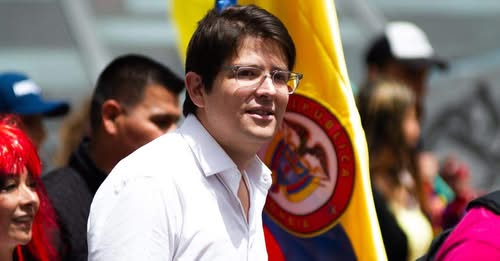
Miguel Uribe Turbay Death – The nation of Colombia is mourning the death of Senator Miguel Uribe Turbay, a prominent political leader and presidential hopeful, who passed away on Monday, August 11, 2025, at the age of 39. Uribe’s death comes just over two months after he sustained critical injuries in a targeted shooting during a campaign rally in Bogotá.
The tragic attack occurred on June 7, 2025, when Uribe, then actively campaigning for the Colombian presidency, was shot in both the head and leg. According to reports, the senator was immediately rushed to a local hospital, where he underwent emergency surgery to address severe cranial and vascular damage. Over the following weeks, medical teams performed multiple procedures in a desperate bid to stabilize his condition. Despite early hopes for recovery, Uribe remained in intensive care and never fully regained consciousness.
In recent days, his health took a serious turn for the worse. Al Día News reported that Uribe suffered a major hemorrhage in his central nervous system, further complicating his already critical state. Medical specialists confirmed that the direct cause of death was an uncontrollable brain hemorrhage that could not be halted despite exhaustive intervention efforts.
News of Uribe’s passing has sent shockwaves through Colombia’s political landscape and beyond. Leaders from across the political spectrum, along with international figures, have expressed deep sorrow over his loss and outrage at the violent circumstances that ended his life. Colombian President Gustavo Petro released a statement praising Uribe’s dedication to democratic principles and his vision for a more unified and just Colombia, while also condemning the culture of political violence that has plagued the nation for decades.
Uribe was widely regarded as one of the country’s rising political stars. Born in Bogotá in 1986, he came from a family with deep political roots—his grandfather, Julio César Turbay Ayala, served as President of Colombia from 1978 to 1982. Miguel Uribe earned a reputation as a reformist, advocating for transparency in government, economic modernization, and stronger measures against corruption and organized crime. His presidential campaign had been gaining momentum prior to the attack, with many viewing him as a potential unifying figure capable of bridging divides in the nation’s often polarized politics.
Public reaction to his death has been marked by both grief and calls for justice. Vigils and memorials have been organized in Bogotá and other cities, where supporters have gathered to honor his legacy and demand accountability for those responsible for the attack. Security agencies have reiterated their commitment to a full investigation, though details about the suspects and motives remain closely guarded.
International organizations, including the Organization of American States and the United Nations, have condemned the killing and urged Colombian authorities to ensure that political candidates can operate without fear of violence.
Miguel Uribe Turbay’s passing is not only a personal tragedy for his family and supporters but also a profound loss for Colombia’s democratic process. His vision for a safer, more equitable nation will remain an enduring part of his legacy, even as the country grapples with the painful void left by his untimely death.