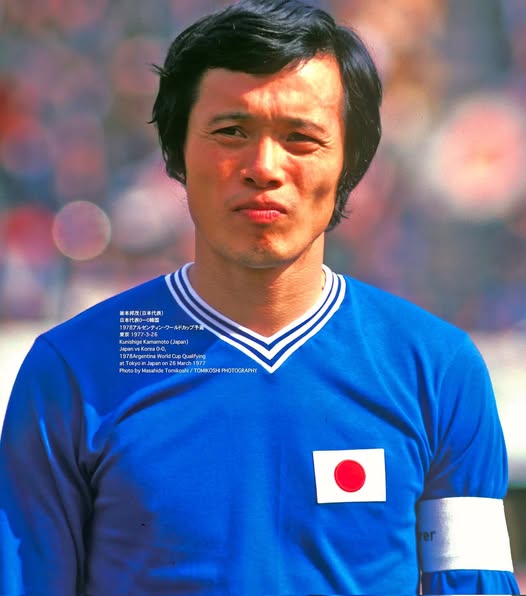
Kunishige Kamamoto Death – Japanese football has lost one of its most iconic figures with the passing of Kunishige Kamamoto, widely regarded as the nation’s greatest striker. He died at the age of 81, leaving behind an enduring legacy that transformed the sport in Japan.
Kamamoto’s name is synonymous with goal-scoring excellence. Representing the Japanese national team between the 1960s and 1970s, he played 76 matches and netted an astonishing 75 goals — a record that remains unmatched in Japanese football history. His prolific scoring ability earned him admiration from generations of players and fans alike, cementing his place as an “absolute ace” of the sport.
His crowning achievement came at the 1968 Summer Olympics in Mexico City, where he led Japan to its first and only Olympic medal in football — a bronze. Kamamoto’s extraordinary performance saw him score seven goals during the tournament, making him the top scorer and the driving force behind Japan’s historic podium finish. The triumph remains one of the most cherished moments in the country’s football history.
Beyond his exploits on the pitch, Kamamoto played an influential role in Japanese football’s development and international presence. In the late 1990s, during the nation’s successful bid to co-host the 2002 FIFA World Cup with South Korea, he served as vice president of the Japan Football Association (JFA). Colleagues recall his calm demeanor, strategic thinking, and unwavering commitment to advancing the sport in Japan. His work during the crucial years leading up to the tournament helped shape Japan’s image on the global football stage.
One former colleague, who worked closely with Kamamoto during the 2002 World Cup bid, fondly remembered their many shared moments at matches and events. Despite their professional ties, Kamamoto remained humble and approachable, often addressing his colleague by his job title — “Section Chief” — rather than by name, a lighthearted quirk that reflected his warm personality.
Kamamoto’s contributions extended far beyond his playing career. After retiring from professional football, he transitioned into coaching and football administration, using his experience to mentor young players and influence the strategic growth of the sport. His leadership within the JFA was instrumental in fostering Japan’s modern football infrastructure, which has since produced world-class players competing on the global stage.
His passing has sparked an outpouring of tributes from the Japanese football community, with fans, players, and officials alike honoring the man whose goals and leadership inspired decades of passion for the sport. Many have recalled not only his unmatched scoring records but also his sportsmanship, humility, and unwavering dedication to Japanese football.
Kunishige Kamamoto leaves behind a legacy that is as towering as his goal-scoring record. His achievements at the 1968 Olympics remain a benchmark of excellence, and his influence as a leader and mentor helped lay the foundations for Japan’s rise in world football.
As Japan mourns the loss of its greatest striker, his story will continue to inspire young footballers to dream big and play with the same determination and grace that defined his remarkable career. His name will forever be etched in the golden history of Japanese sport.