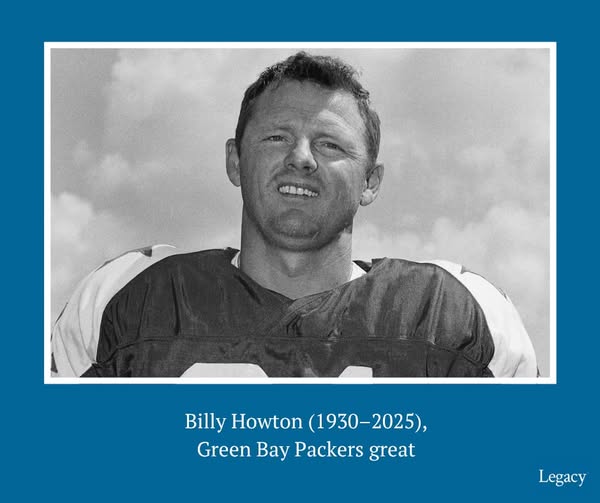
Billy Howton Death – Billy Howton, a trailblazing wide receiver for the Green Bay Packers and the first president of the NFL Players Association (NFLPA), passed away on Monday, August 4, 2025, in Houston, Texas. He was 95 years old and was believed to be the oldest living NFL player at the time of his death. According to his obituary, Howton died peacefully after a long and accomplished life. While the family did not disclose a specific cause, Yahoo Sports reported that his passing was due to natural causes.
Howton’s NFL journey spanned 12 seasons, during which he played for the Green Bay Packers, Cleveland Browns, and Dallas Cowboys. Known for his exceptional speed, precise route-running, and sure hands, he quickly made a name for himself as one of the league’s most dangerous receivers.
In his rookie season in 1952, Howton made an immediate impact, setting an NFL rookie record with 13 touchdown receptions — a mark that stood for decades. He also etched his name into the Packers’ history books by recording 257 receiving yards in a single game, a franchise record that still stands. Over his career, he was honored as a two-time First-team All-Pro and selected for four Pro Bowls.
By the time he retired in 1963, Howton held the NFL’s all-time records for career receptions and receiving yards — a testament to his consistent excellence and durability in an era when passing offenses were far less prolific than today.
Beyond his on-field achievements, Billy Howton’s legacy is equally defined by his groundbreaking work off the field. In 1958, he became the first president of the newly formed NFL Players Association, serving until 1962. Under his leadership, the NFLPA achieved critical milestones, including the establishment of the NFL Player Retirement Plan, which provided essential financial security for former players.
His advocacy helped lay the foundation for the modern NFLPA, shaping how players are represented, protected, and compensated. Even decades later, the association continues to acknowledge Howton’s contributions as pivotal in advancing the rights and benefits that players enjoy today.
In recognition of his outstanding career, Howton was inducted into the Green Bay Packers Hall of Fame in 1974. His influence, however, extends well beyond the accolades and statistics. He is remembered by teammates, opponents, and football historians as a fierce competitor, a forward-thinking leader, and a man who valued the welfare of his peers as much as his personal success.
Billy Howton’s passing marks the end of a chapter in NFL history, but his impact will continue to resonate. From record-breaking performances on the field to transformative leadership off it, his contributions have left an enduring mark on professional football.
As the NFL and its players move forward, they do so on the strong foundation that Howton helped build — one that ensures athletes are celebrated not only for their talents, but also respected for their rights and dignity.